The rebranding has been approved, and now it needs to be implemented at forty locations.
A rebrand is typically managed as a design project and then handed over as a logistics project, often to someone who was not in the room during the initial design phase. The design work is completed, the guidelines are signed off, and what remains is the more challenging task: how do you ensure that every printed item at every location is changed over, without either a period where half the network looks old and half looks new, or a store cupboard full of stationery that is now unusable?
This is a sequencing problem that emphasizes planning over budgeting. The following approach is effective for multi-site organizations, whether they consist of forty retail outlets, a dozen clinics, or three offices in different countries.

Start with an audit, not an order
Before anything is printed, it's essential to understand what already exists. This step can be quite tedious, but it's important for ensuring that the project runs smoothly.
Create a list of all printed items that carry brand identity:
- Stationery includes letterheads, compliment slips, envelopes in various sizes, and business cards for each person.
- Customer-facing materials include brochures, leaflets, price lists, menus, forms, and appointment cards.
- Operational items include labels, packaging, delivery notes, invoices, and folders.
- Environmental graphics include signage, window graphics, posters, banners, and vehicle graphics.
- Anything with a logo that doesn't immediately come to mind as print: lanyards, name badges, ID cards.
For each item, record the current stock held at each location, the usage rate, and who orders it. The usage rate is what allows you to calculate the depletion rate, and it is the number that most organizations do not have.
The forgotten items
Certain items are often overlooked: window vinyl at the back entrance, the sign in the car park, forms held by a third party such as a fulfillment partner, the pull-up banner stored in a cupboard and used twice a year, and templates saved on individual laptops. Each location should be asked to walk through their premises, photographing anything with the logo on it. This process produces a more comprehensive list than any central inventory.
Sequencing: what changes when
Trying to switch everything on one day can be costly and is usually unnecessary. Grouping items by their visibility and by their cost can lead to a more effective plan.
Group one: high visibility, change together.
Exterior signage, window graphics, customer-facing displays, and anything photographed by customers define whether the rebrand appears coordinated or chaotic. These elements should change across all locations within as short a window as possible, ideally within days.
Group two consists of fast-moving consumer goods, which are consumed first.
Items that are used up quickly, such as bags, receipt rolls, appointment cards, and menus, need careful management. Since they turn over fast, existing stock naturally clears out. To ensure a smooth transition, time the changeover so that new stock arrives just as the old stock runs out. Avoid replacing part-used boxes.
Group three consists of slow-moving items, so plan carefully.
Letterheads, envelopes, and folders often remain in cupboards for a year or more, which is where waste accumulates. Two options exist: either reduce the remaining stock before switching, accepting a period of mixed identity in low-visibility internal use, or dispose of the old stock and replace it. The first option is cheaper and usually acceptable for internal documents.
Group four: personalised items
Business cards and name badges, which vary per person. These need a system rather than a single order, and that is covered in the article on business card programmes for growing teams.

Ordering: central, not local
Allowing each site to order its own materials during a rebrand can lead to inconsistency. Some sites might use old files, others might select slightly different stocks, and some might approve proofs that senior management never reviews.
A central template library with locked brand elements and editable local details solves most of this. Each site fills in its own address and contact details within a fixed layout, and the design cannot be altered. The mechanics of that approach are covered under print templates for multi-department teams.
Combining this with a single production run per item across all sites can be highly efficient. For example, printing forty locations' worth of letterhead in one job with a variable address is far less costly than forty separate orders. This approach also ensures that the stock and colour match across all locations.
Storage and staged release
Printing everything at once provides the best unit price. However, shipping everything at once can create storage issues for every location and may tempt people to start using new materials early. This is precisely what a coordinated launch aims to prevent.
The answer is to print in one run and hold stock centrally, releasing to sites on a schedule. Where that storage sits, and how call-off works, is covered under warehousing and print-on-demand.
Ensuring colour consistency throughout a long rollout
A rebrand typically unfolds over several weeks or months, and it involves various substrates such as paper, vinyl, fabric, rigid board, and painted signage. Each substrate reproduces colors differently, so a brand color that appears correct on a brochure might look noticeably different on a banner.
Specify brand colors using spot references rather than process builds. Produce a physical reference set on each substrate you will use. Approve these once, and match everything to them. Keep signed reference samples throughout the rollout period, as the final batch may be printed six months after the initial batch.
A workable timeline
- Weeks one to three: audit every item at every location, including photographs
- Weeks three to five: apply the new identity to templates, produce physical reference samples on each substrate, approve centrally
- Weeks five to eight: production of group one and group two items, held centrally
- Week eight: distribute to sites, sealed, with instructions not to open before launch
- Launch week: signage and high-visibility items switch across all sites
- Following months: group three items replaced as stock runs down
Include a contingency for the signage installation, as it is contingent on landlord approval, permits, and installer availability. This is the most likely component to experience delays.
Running a rollout with us
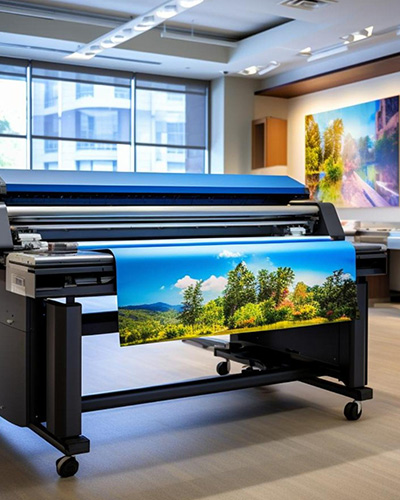
We manage multi-site rollouts as a single program rather than a series of separate orders. This approach involves a single production run for each item, incorporating variable local details. Before scaling, physical reference samples are approved. Central storage is used, along with staged releases to each site according to your schedule.
We will also provide you with a straightforward answer to the slow-moving inventory question. This approach often saves more money than any unit-price negotiation. For each slow-moving item, we will determine whether it is more cost-effective to use up existing stock or to replace it now. This decision will be based on your usage data, which is why the audit comes first.
Send us your item list and site count and we will map the production and release schedule against your launch date. See related corporate work under general printing, or get in touch through the contact page.
The short version
Audit every branded item at every site before ordering anything, using site photographs rather than central records. Group items by visibility: switch high-visibility items together in a tight window, run down slow-moving stock, and time consumables to arrive as old stock clears. Order centrally in one run with variable local details, hold stock centrally, and release on a schedule. Approve physical colour references on every substrate and keep them for the whole rollout.
Conduct the audit properly, and the rest will be just scheduling. If you skip it, you'll end up reprinting things you didn't realize existed.