Signage is the last thing on the move checklist
When a Singapore company moves office or renovates, the signage usually comes up in the final fortnight. The lease is signed, the contractor has the floor plan, the IT vendor has the cabling, and then someone notices that the reception wall is blank, the meeting rooms have no names and visitors cannot find the toilets. At that point every sign becomes a rush job, often priced as one.
This guide is for office managers, facilities teams and admin staff who handle an office move or refit. It covers the main types of interior office signage, the materials used, what to ask the landlord and building management, and how to order so that everything is installed before the first staff arrive.
The main types of office signage
Most offices need the same handful of items, in different quantities. It helps to list them room by room from the floor plan before asking for quotes.
- Reception logo wall: the company logo behind the front desk. Often the most visible print item the company owns.
- Glass manifestation: frosted or printed bands on glass walls and doors, which stop people walking into the glass and add privacy to meeting rooms.
- Meeting room and door signs: room names, numbers, and sometimes a slot for a changeable insert.
- Directory and wayfinding: floor directory at the lift lobby, directional signs in large offices, and department names.
- Statutory and safety signs: fire exits, assembly points and similar items. These are usually handled by the building or the fit-out contractor, so confirm who is responsible.
- Wall graphics: printed vinyl murals, values statements or brand imagery in pantries and corridors.
Materials and where to use them
| Item | Common materials | Points to check |
|---|---|---|
| Reception logo | 3D acrylic letters, brushed metal finish, or printed panel with stand-off mounting | Wall construction; drywall needs the right fixings |
| Glass manifestation | Frosted vinyl, printed clear vinyl, cut vinyl patterns | Height band agreed with the contractor; fit before furniture arrives |
| Meeting room signs | Acrylic with printed or cut vinyl, aluminium plates | Changeable inserts if room names may change |
| Directory boards | Acrylic, aluminium composite panel, printed vinyl on board | Building rules on lift lobby signage |
| Wall graphics | Printed wall vinyl with laminate, wallpaper-type media | Paint must be fully cured; textured walls hold vinyl poorly |
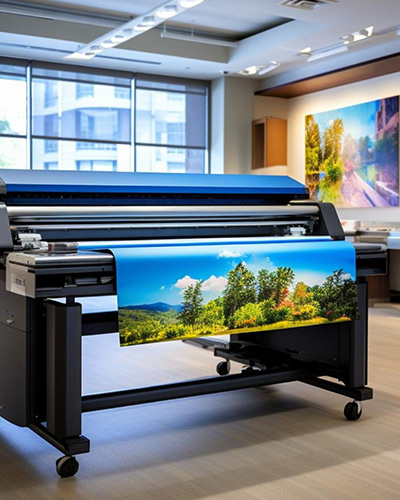
For larger printed panels and wall vinyl, our wide format printing services cover the production side. Cut acrylic letters and metal finishes are typically made by a specialist and coordinated through the same order.
Ask the landlord and building management first
Commercial buildings in Singapore usually have fit-out guidelines, and signage is often covered. Before any design work, ask building management for:
- Rules for signage visible from common areas, such as the lift lobby or corridor. Some buildings supply a standard tenant sign and do not allow anything else.
- Any approval process for external or lobby signs, and how long it takes.
- Installation hours. Many buildings only allow drilling and noisy work after office hours or on weekends.
- Whether the installer needs to be registered with the building, have insurance or submit a method statement.
- Reinstatement rules at the end of the lease, which affect how signs should be fixed.
The last point matters more than it looks. If you will have to restore the walls when you leave, adhesive-mounted or stand-off signs that leave small holes are easier to remove than signs glued straight to the paint.
Glass manifestation in more detail
Most new offices have glass meeting rooms, and the glass needs markings so people can see it. Fit-out contractors often include a basic frosted band, but the band can do more than prevent accidents. A frosted band with the company pattern cut out, or a gradient that gives privacy at seated height, makes the space feel designed.
Agree the height and depth of the band with the contractor and with whoever is choosing the furniture. A band that ends just above a seated person's head defeats the point of privacy. Measure each panel on site; glass panels in the same room are often not the same width.
Room names that do not need reprinting
Teams like to name meeting rooms after places, colours or values. Six months later, a reorganisation turns two rooms into one and a project room into a phone booth. Plan for this:
- Use a fixed frame or plate with the logo, and a printed insert or vinyl name that can be swapped.
- Keep capacity and equipment details (screen, video conferencing) on the booking system, not on the sign.
- Order two or three spare blank plates in the same finish for future rooms.
The same approach of separating fixed and changing information is something we recommend for handbooks and SOPs with version control; it applies just as well to walls.
Budgeting and phasing the work
Office signage quotes vary widely, and the spread usually comes from three things: the reception logo, the amount of glass, and installation. A logo in 3D letters with a metal finish costs far more than a printed panel on stand-offs, yet both look professional from the front door. Glass manifestation is priced by area and by how complex the cut pattern is. Installation depends on the number of trips, after-hours work and access rules in the building.
If the budget is tight, split the work into two phases. Phase one covers what is needed on day one: glass safety markings, room names, the floor directory and a reception logo. Phase two, a few months later, adds wall graphics and brand murals once the team has settled in and knows which walls people actually look at. Procurement teams often prefer this, since the second phase can be approved in the next budget cycle.
Timeline for a move
- 8 weeks before: get the floor plan and building guidelines; list every sign needed.
- 6 weeks before: brief the designer and request quotes; confirm logo files in vector format.
- 4 weeks before: approve designs and materials; submit anything that needs building approval.
- 2 weeks before: production; agree installation date and hours with building management.
- Final week: installation after painting and before furniture where possible; walk the space and check every sign.
The move is also the time to update printed stationery with the new address. Our guide to letterheads and compliment slips covers that side, and new name cards are usually needed for everyone at the same time.
Office signage from printservicesingapore.net
We coordinate office signage for Singapore companies moving into new premises or refreshing an existing office: reception logos, glass manifestation, room signs, directories and wall graphics, produced and installed to the building's rules. We can work from your fit-out contractor's drawings and coordinate installation dates with building management.
If you have a move coming up, send us the floor plan, a few photos of the space and your logo files. We will prepare a sign schedule room by room, suggest materials and give a quote that separates what is needed for day one from what can follow later. You can also order updated name cards with the new address in the same order. Contact us through our contact page.